It’s hard to accept that 46 million turkeys will be slaughtered this Thanksgiving in the name of tradition. Nearly all of these birds live in confinement on factory farms and endure painful mutilations, including debeaking and toe removal procedures without anesthesia. These living, feeling individuals deserve so much better.
You can help inspire people to think about turkeys differently. We invite you to adopt a turkey this Thanksgiving — instead of eating one!
With a donation of $35, you can symbolically adopt a rescued turkey living at Farm Sanctuary — and for $150, you can sponsor this year’s featured flock. Adopt for yourself or as a gift to a friend or family member!
Each Farm Sanctuary Adopt a Turkey adoption:
- Arrives with a personalized digital certificate with your name, a photo, and facts about the adopted turkey;
- Provides an optional bi-fold printed certificate (great for displaying on your holiday table!);
- Offers our deepest thanks for supporting our rescue, education, and advocacy work on behalf of turkeys and other farm animals.
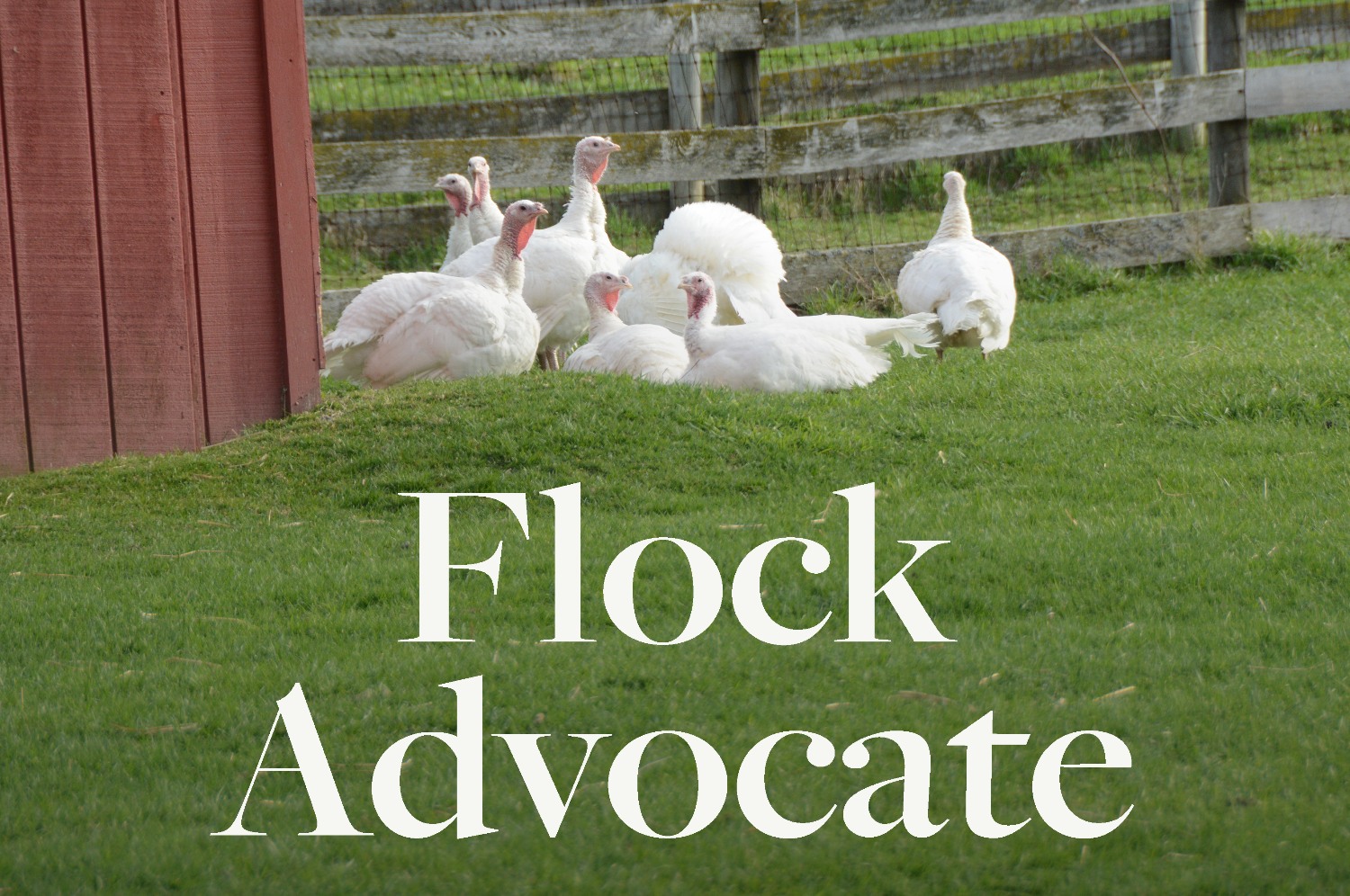
This year, we’re also excited to introduce the Flock Advocate package! This $500 gift includes a special Flock Advocate certificate, a commemorative 2023 Adopt a Turkey mug and an invitation to an exclusive conversation with Farm Sanctuary President and Co-Founder Gene Baur.