Factory Farming
Thanksgiving's Toll on Turkeys
Between 250 and 300 million turkeys are raised for slaughter every year in the U.S. – more than 46 million alone for Thanksgiving. U.S. turkey consumption, which has increased by 108 percent since 1970, averaged at 17.6 pounds per person last year.
Factory Farming
Packed by the thousands inside huge, factory farm warehouses, female turkeys raised for slaughter in the U.S. are typically allotted one square foot of space per bird, while toms are given little more than two square-feet, according to the National Turkey Federation’s guidelines. The overcrowded birds, who are unable to comfortably move, or exhibit natural behaviors, are driven to excessive pecking and fighting. Rather than alter the birds’ living space to prevent these injurious behaviors, producers cut off the ends of the turkeys’ beaks and toes, practices know as debeaking and detoeing. These painful mutilations are performed without anesthesia and can result in excessive bleeding, infections and death.
Genetic Manipulation
Modern turkeys have been genetically manipulated to grow twice as fast, and twice as large, as their ancestors. Comparing a turkey poult’s growth rate with that of a human baby, Lancaster Farming, an agriculture newspaper, reported: “If a seven pound [human] baby grew at the same rate that today’s turkey grows, when the baby reaches 18 weeks of age, it would weigh 1,500 pounds.” The strain of growing so quickly makes young turkeys susceptible to cardiovascular disease and can lead to fatal heart attacks. Although this rapid growth poses a serious threat to the animals’ health and welfare, the turkey industry continues to push birds beyond their biological limits.
Between 1965 and 2000, the weight of the average turkey raised commercially in the U.S. increased by 57 percent, from an average of 18 pounds to an average of 28.2 pounds. Commercially-raised turkey hens now weighed an average of 15.3 pounds at the time of slaughter. Turkey males (toms) weigh an average of 33 pounds. This continual increase in growth causes commercially-bred turkeys to suffer from crippling foot and leg problems too. According the agribusiness newspaper Feedstuffs, “...turkeys have been bred to grow faster and heavier but their skeletons haven't kept pace, which causes 'cowboy legs'. Commonly, the turkeys have problems standing, and fall and are trampled on or seek refuge under feeders.”
Catering to consumer tastes at the expense of animals, producers also raise turkeys with abnormally large breasts which prevent them from mounting and reproducing naturally. As a result, artificial insemination is now the sole means of reproduction on factory farms, where breeder birds are confined for months on end.
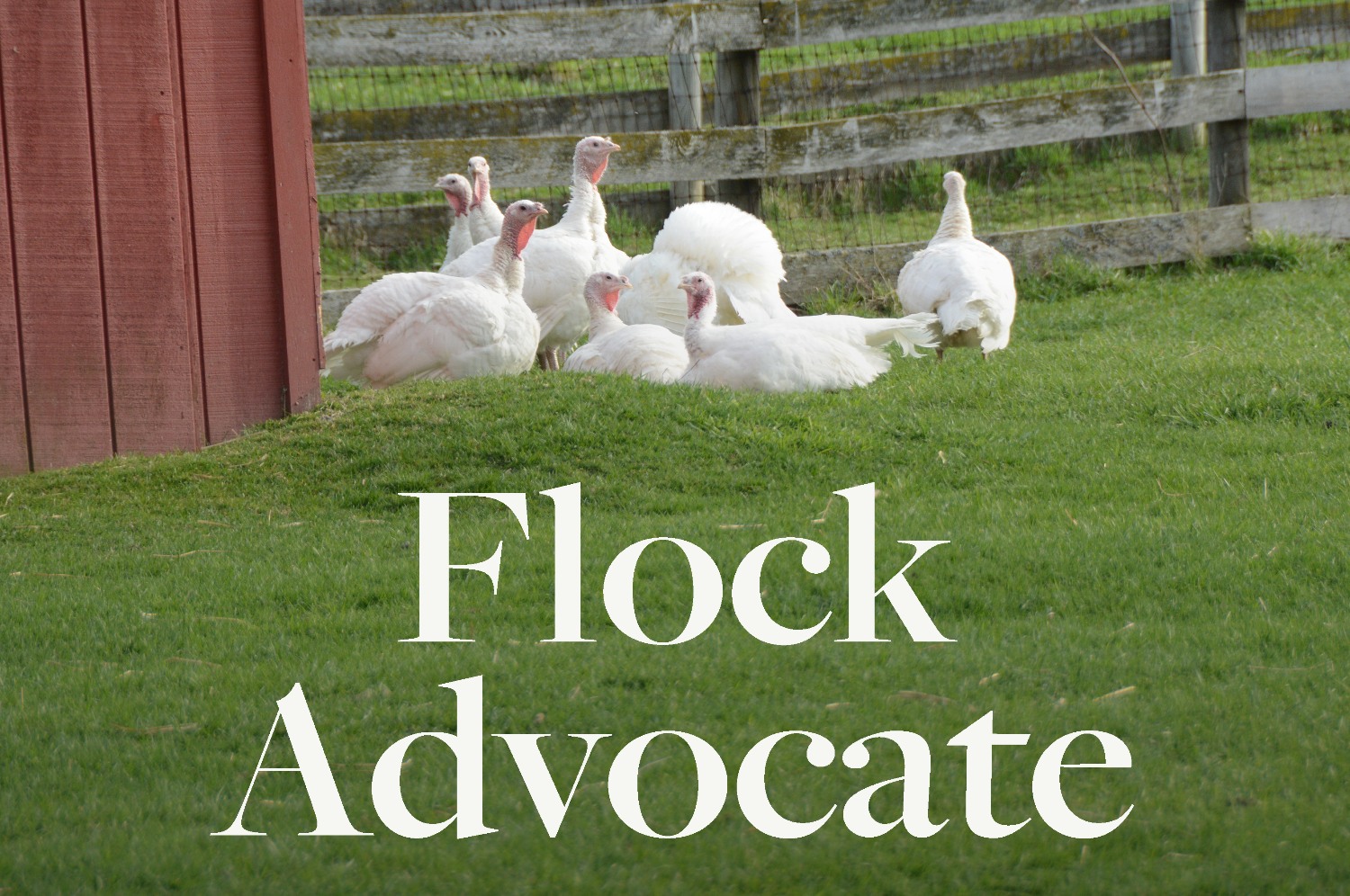
Completely unlike their wild ancestors not only in terms of physique but also in hue, commercial turkeys are white, the natural bronze color bred out of them so their bodies are pigment-free and more palatable to consumers.
Transport
When turkeys reach slaughter weight at just 14 to 18 weeks of age, they are transported to slaughter. Workers often roughly grab turkeys by the legs and throw the birds into crates, which are stacked on the back of trucks. The crates normally have open sides and do not protect the birds from the elements during transport. As a result, the birds are exposed to extreme weather conditions and may die of heat stress in the summer or freeze to death in the winter. Turkeys and other farm animals may be legally transported for up to 28 hours without food, water or rest.
Slaughter
At the slaughterhouse, fully conscious turkeys are hung by their feet from metal shackles on a moving rail. The first station on most poultry slaughterhouse assembly lines is the stunning tank, where the turkeys' heads are submerged in an electrified bath of water. Stunning procedures are not monitored, and are often inadequate, leaving the fully conscious birds to continue along the slaughterhouse assembly line. Some slaughterhouses do not even attempt to render these birds unconscious, as turkeys and other poultry are specifically excluded from the Humane Slaughter Act, which requires that animals be stunned prior to slaughter.
After passing through the stunning tank, the turkeys' throats are slashed, usually by a mechanical blade, and blood begins rushing out of their bodies. Inevitably, the blade misses some turkeys, who then proceed to the next station on the assembly line:, the scalding tank. Here, they are submerged in boiling hot water, and turkeys missed by the killing blade are boiled alive – a brutal end to a miserable existence on factory farms.
It doesn’t have to be this way …
Please join Farm Sanctuary in saving a life, rather than ending one on Thanksgiving Day. You can spread compassion for turkeys and promote cruelty-free alternatives through the Adopt-A-Turkey Project. Sponsor or home adopt a rescued turkey, take action for turkeys everywhere and get vegan holiday recipes to join us in making a difference today!
|